
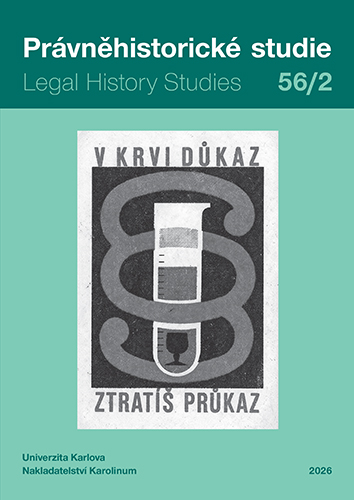
Právněhistorické studie (dále jen PHS) jsou odborným časopisem zařazeným do prestižní mezinárodní databáze SCOPUS, vydávaným Univerzitou Karlovou za vědecké garance Katedry právních dějin Právnické fakulty UK v univerzitním nakladatelství Karolinum. PHS jsou časopisem zaměřujícím se na obor právních dějin a témata, která s nimi souvisejí.
První číslo časopisu vyšlo v Nakladatelství Československé akademie věd v červnu roku 1955. Časopis byl nejprve vydáván Kabinetem právních dějin ČSAV, později Ústavem státu a práva ČSAV a poté Ústavem právních dějin Právnické fakulty Univerzity Karlovy.
PHS vycházejí třikrát ročně v dubnu, srpnu a prosinci a otiskují původní vědecké práce, vedle nich i recenze, anotace a zprávy z vědeckého života z oboru právních dějin. Přinášejí rovněž komentované materiály právněhistorické povahy. PHS přijímají příspěvky od domácích i zahraničních autorů. Příspěvky zahraničních autorů jsou uveřejňovány v původním jazyku, a to v angličtině, slovenštině, němčině, francouzštině, italštině nebo polštině.
Časopis Právněhistorické studie (ISSN 0079-4929) je evidován v Českém národním středisku ISSN (vedena Státní technickou knihovnou). Časopis je evidován Ministerstvem kultury ČR podle zákona č. 46/2000 Sb., o právech a povinnostech při vydávání periodického tisku a o změně některých dalších zákonů (tiskový zákon), a má přiděleno evidenční číslo periodického tisku MK E 18813.
Časopis Právněhistorické studie je tzv. otevřeným časopisem a zajišťuje otevřený přístup k vědeckým informacím (Open Access). Veškerý obsah od čísla 48/2 je zveřejněn na webových stránkách časopisu (studie od čísla 43/2013), přičemž přístup k němu mají všichni bezplatně.
Časopis Právněhistorické studie využívá licenci Creative Commons: CC BY 4.0.
Dlouhodobou archivaci digitálního obsahu časopisu zajišťuje Portico.
PRÁVNĚHISTORICKÉ STUDIE, Vol 56 No 1 (2026), 43–63
ArticleTalión a trestné právo predhispánskych Nahuov
[Talion and Pre-Hispanic Nahua Criminal Law]
Peter Vyšný
DOI: https://doi.org/10.14712/2464689X.2026.188
zveřejněno: 22. 04. 2026
Abstract
This paper confirms the hypothesis that the pre-Hispanic Nahua people had a more complex understanding of the principle of talion than is generally accepted, which was not limited to its use as a specific mode of punishment in which the nature of the punishment corresponded to the nature of the crime for which it was inflicted. In pre-Hispanic Nahua society, the principle of talion guided the punishment of offenders through religious-magical rituals that served both punitive and restorative functions. In the first instance, these rituals represented the perpetrators’ punishment. In the latter, they primarily served to repair the “damaged” cosmic order with the aid of the gods. This was often associated with the gods’ supernatural transformation of crimes and their negative consequences into positive phenomena. The rituals also served a secondary purpose of repairing injuries and compensating for damages suffered by victims and their survivors. The rituals used for punishment consisted of actions that were the opposite of those by which the crimes were committed and their negative consequences. As the perpetrators, the crimes and their consequences were conceptualised as dangerous and harmful pollution, the rituals used for punishment were purifying. The necessity of eliminating this pollution, coupled with the fact that only courts and other state bodies could perform these rituals, reinforced the state’s monopoly on prosecuting and punishing criminals.
klíčová slova: pre-Hispanic period; Central Mexico; Nahuas; crime; punishment; ritual; talion; offender; pollution; meaning of punishing criminals in ritual form and according to the principle of talion
reference (45)
1. ASSMANN, J. Panství a spása. Politická theologie ve starověkém Egyptě, Izraeli a Evropě. Praha: OIKOYMENH, 2012.
2. BENEDICT, R. The Chrysanthemum and the Sword. Patterns of Japanese Culture. London: Secker & Warburg, 1947.
3. BERDAN, F. F. Aztec Archaeology and Ethnohistory. New York: Cambridge University Press, 2014. CrossRef
4. BERDAN, F. F. et al. (eds.). Aztec Imperial Strategies. Washington, D. C.: Dumbarton Oaks Research Library and Collection, 1996.
5. BROKMANN, C. H. La flecha dorada. Pluralismo y derechos humanos en los sistemas jurídicos de Mesoamérica. México: Comisión Nacional de los Derechos Humanos, 2018.
6. BRUMFIEL, E. M. The politics of high culture: issues of worth and rank. In: RICHARDS, J. - VAN BUREN, M. (eds.). Order, legitimacy and wealth in ancient states. Cambridge: Cambridge University Press, 2000.
7. BURKHART, L. M. The Slippery Earth. Nahua-Christian Moral Dialogue in Sixteenth Century Mexico. Tucson: University of Arizona, 1989.
8. CARRASCO, D. Náboženství Mezoameriky. Kosmovize a obřadní centra. Praha: Prostor, 1998.
9. DOUGLASOVÁ, M. Čistota a nebezpečí. Analýza konceptu znečištění a tabu. Praha: Malvern, 2014.
10. DURÁN, D. Historia de las Indias de Nueva España e Islas de Tierra Firme, II. México: Consejo Nacional para la Cultura y las Artes, 2002.
11. EBERT, U. Talion und Spiegelung im Strafrecht. In: Küper, W. et al. (Hrsg.). Festschrift für Karl Lackner zum 70. Geburtstag am 18. Februar 1987. Berlin: Walter de Gruyter, 1987. CrossRef
12. ECKHART, O. 9. Die Geschichte der Talion im Alten Orient und Israel. In: ECKHART, O. Kontinuum und Proprium. Studien zur Sozial- und Rechtsgeschichte des Alten Orients und des Alten Testaments. Wiesbaden: Harrassowitz Verlag, 1996.
13. Éstas son leyes que tenían los indios de la Nueva España, Anáhuac o México. In: KOHLER, J. El derecho de los aztecas. CERVANTES Y ANAYA, J. de. Introducción a la Historia del Pensamiento Jurídico en México. México: Tribunal Superior de Justicia del Distrito Federal, 2002, s. 183-195.
14. FIKENTSCHER, W. Law and Anthropology. Outlines, Issues, and Suggestions. München: Verlag der Bayerischen Akademie der Wissenschaften, 2009.
15. GRAULICH, M. La royauté sacrée chez les aztèques de México. Revista Española de Antropología Americana, 1998, No. 28.
16. HARRIS, E. M. The Family, the Community and Murder: The Role of Pollution in Athenian Homicide Law. In: ANDO, C. - Rüpke, J. (eds.). Public and Private in Ancient Mediterranean Law and Religion. Berlin: De Gruyter, 2015. CrossRef
17. IBARRA GARCÍA, L. La moral en el mundo prehispánico. Una contribución a la sociología de la normatividad. México: Porrúa, 2008.
18. IXTLILXOCHITL, F. de Alva. Obras Históricas. Tomo I. Tercera edición facsimilar. México: Instituto Mexiquense de Cultura; Universidad Nacional Autónoma de México, Instituto de Investigaciones Históricas, 1997.
19. JOHANSSON K., P. Miquiztlatzontequiliztli. La muerte como punición o redención de una falta. Estudios de Cultura Náhuatl, 2010, Vol. 41.
20. KAŠNÝ, J. Právo v hebrejské Bibli. Praha: Vyšehrad, 2017.
21. KLEIN, C. F. Teocuitlatl, "Divine Excrement" - The Significance of "Holy Shit" in Ancient Mexico. Art Journal, 1993, Vol. 52, No. 3. CrossRef
22. KOVÁČ, M. Slnko jaguára. Náboženský svet Olmékov, Mayov a Aztékov. Bratislava: Chronos, 2002.
23. LEÓN-PORTILLA, M. La filosofía náhuatl estudiada en sus fuentes. México: Universidad Nacional Autónoma de México, Instituto de Investigaciones Históricas, 1993.
24. LEÓN-PORTILLA, M. - SILVA GALEANA, L. Huehuetlahtolli. Testimonios de la antigua palabra. México: Fondo de Cultura Económica, 1991.
25. LOCKHART, J. The Nahuas After the Conquest. A Social and Cultural History of the Indians of Central Mexico, Sixteenth Through Eighteenth Centuries. Stanford: Stanford University Press, 1992.
26. LÓPEZ AUSTIN, A. Cuerpo humano e ideología. Las concepciones de los antiguos nahuas. I. México: Universidad Nacional Autónoma de México, Instituto de Investigaciones Antropológicas, 2004.
27. LÓPEZ AUSTIN, A. Sobre el concepto de cosmovisión. In: GÁMEZ ESPINOSA, A. - LÓPEZ AUSTIN, A. (coords.). Cosmovisión mesoamericana. Reflexiones, polémicas y etnografías. México: El Colegio de México, 2015.
28. LÓPEZ AUSTIN, A. - LÓPEZ LUJÁN, L. El pasado indígena. 3a ed. México: El Colegio de México, 2014.
29. MARGADANT S,. G. F. Introducción a la historia del derecho mexicano. Decimoctava edición. México: Esfinge, 2006.
30. MILLER, G. P. The Legal Function of Ritual. In: Chicago-Kent Law Review, 2005, Vol. 80, Issue 3.
31. NICHOLS, D. L. - RODRÍGUEZ-ALEGRÍA, E. (eds). The Oxford Handbook of the Aztecs. New York: Oxford University Press, 2016. CrossRef
32. OFFNER, J. A. Law and Politics in Aztec Texcoco. Cambridge: Cambridge University Press, 1983.
33. PARDO, O. How to Punish Indians: Law and Cultural Change in Early Colonial Mexico. Comparative Studies in Society and History, 2006, Vol. 48, No. 1. CrossRef
34. SAHAGÚN, B. de. Historia general de las cosas de la Nueva España, I. Madrid: Dastin, 2001.
35. SMITH, M. E. The Aztecs. 3rd edition. Hoboken, NJ: Wiley - Blackwell, 2012.
36. STARÝ, J. - VÍTEK, T. Zákon, právo a spravedlnost v archaickém myšlení. In: ANTALÍK, D. - STARÝ, J. - VÍTEK, T. (uspořádali). Zákon a právo v archaických kulturách. Praha: Herrmann & synové, 2010.
37. TORQUEMADA, J. de. Monarquía Indiana. Tomo segundo. México: Porrúa, 1969.
38. TRIGGER, B. G. Understanding Early Civilizations. A Comparative Study. New York: Cambridge University Press, 2007.
39. VÍTEK, T. - STARÝ, J. Zrcadlení chaosu. Úvodní studie. In: VÍTEK, T. - STARÝ, J. - ANTALÍK, D. (eds.) Řád a chaos v archaických kulturách. Praha: Herrmann & synové, 2010.
40. VYŠNÝ, P. Pramene predhispánskeho práva Nahuov. In: OLŠOVSKÁ, A. - LACLAVÍKOVÁ, M. - MORAVČÍKOVÁ, M. (eds.). Fontes iuris. Kraków: Towarzystwo Slowaków w Polsce, 2017.
41. VYŠNÝ, P. El derecho en Tenochtitlan. Aspectos jurídicos del orden social de una ciudad-estado prehispánica. Praha: Leges, 2019.
42. VYŠNÝ, P. Pre-Hispanic Nahua Slavery. In: Ethnologia Actualis: revue pre výskum kultúr etnických spoločenstiev = The Journal of Ethnographical Research, 2020, Vol. 20, No. 2. [online] [cit. 2025-05-10]. Dostupné na: <https://sciendo.com/article/10.2478/eas-2021-0012> CrossRef
43. VYŠNÝ, P. Trestné právo predhispánskych Nahuov a vyššia moc. In: LYSÝ, M. - MÚCSKA, V. - ROŠKOVÁ, D. (eds.). Vyššia moc pri výkone spravodlivosti. Bratislava: Univerzita Komenského v Bratislave, 2024.
44. WESTBROOK, R. et al. A History of Ancient Near Eastern Law. Volume One. Leiden; Boston: Brill, 2003. CrossRef
45. YOFFEE, N. Law courts and the mediation of social conflict in ancient Mesopotamia. In: RICHARDS, J. - VAN BUREN, M. (eds.). Order, legitimacy and wealth in ancient states. Cambridge: Cambridge University Press, 2000.

Talión a trestné právo predhispánskych Nahuov is licensed under a Creative Commons Attribution 4.0 International License.
170 x 240 mm
vychází: 3 x ročně
cena tištěného čísla: 250 Kč
ISSN: 0079-4929
E-ISSN: 2464-689X