
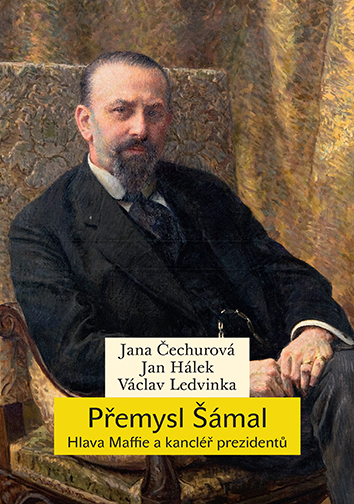
Přemysl Šámal
Hlava Maffie a kancléř prezidentů
[Přemysl Šámal. Head of Maffia and Head of the Presidential Office]
Čechurová, Jana – Hálek, Jan – Ledvinka, Václav
subjects:
history – 20th century, biographies and memoirs
e-book, 1. edition
published: august 2025
ISBN: 978-80-246-6005-9
e-book formats PDF
recommended price: 320 czk
summary
This book presents the first comprehensive account of the life story of Přemysl Šámal (1867–1941) and his family. Šámal, a Prague lawyer, was one of the leading figures of interwar Czechoslovakia. During World War I, he became the head of a secret organisation (known as “Maffia”), and in late October 1918, he participated in negotiations between representatives of the foreign and domestic resistance movements in Geneva. After the establishment of the independent republic, he became mayor of Prague, but in early 1919 he accepted an offer from T. G. Masaryk and became Head of his Presidential Office – for the next nineteen years, he served as head of the office of presidents Masaryk and Beneš and was an unassuming yet pivotal coordinator of personal relationships and networks of influence that transformed the Prague Castle into a centre of power operating outside official political structures. After the Munich Agreement and Beneš’s abdication, Šámal resigned from the post and withdrew into seclusion; however, he could not come to terms with the occupation of post-Munich Czech lands and Slovakia, and as early as the summer of 1939, he took the helm of the anti-Nazi underground resistance organisation Politické ústředí (Political Headquarters). Although his leadership role was largely formal and symbolic (derived from the authority of the head of the former Maffia), he was arrested by the Gestapo in January 1940 and, after more than a year of suffering in Nazi prisons, where he fell seriously ill, died on 9 March 1941, while in internment in Berlin-Tempelhof. The fate of Šámal’s family was also tragic: his only son, Jaromír Šámal, was executed as a hostage in the very first days of the Heydrich Terror; his daughter-in-law spent the entire war in concentration camps, and his grandchildren, Jiří and Alena, were sent to a family in Germany for “re-education.” After liberation, both children were located and returned to their homeland and to their mother.
While writing the book, the authors drew on contemporary testimonies from people in Šámal’s surroundings, but primarily on preserved archival sources, a selection of which is included in this edition.